Skip to content
Service · Marketplace SEO

Marketplace SEO: structure, content, and technical foundation for multi-vendor platforms.

Yassinext supports Moroccan and international marketplaces: architecture, variants, hreflang, segmented sitemaps, Product/Offer schema. Catalog depth becomes an organic advantage — not wasted crawl.
See the Flaha case
4technical levers
7segmented sitemaps
6Product schema types
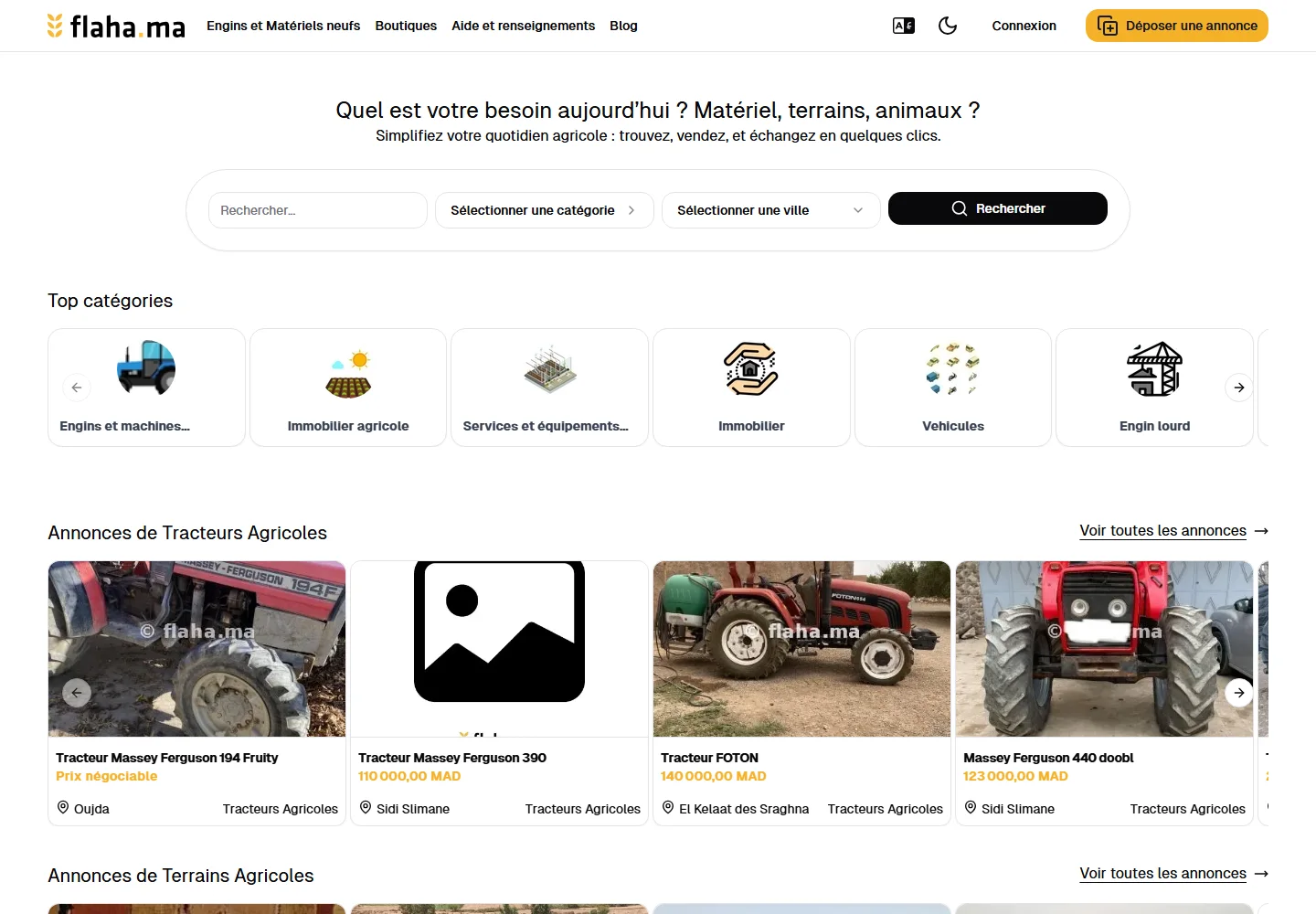
Flaha — desktop
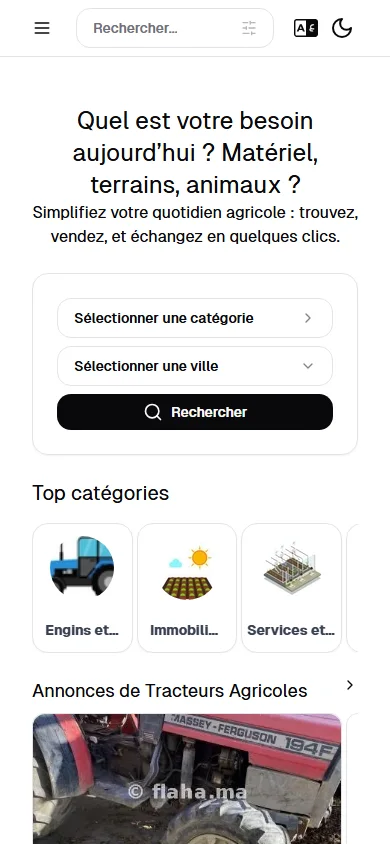
Flaha — mobile
Real case · Flaha agricultural marketplace

The problem

A marketplace generates 10x more URLs than an e-commerce. Without rules, Google indexes the wrong ones.

Thousands of thin URLs

Filters, sorts, internal searches, and facets create indexable URLs that will never bring traffic. Google wastes its crawl budget.

Duplicated product variants

A product sold by multiple vendors or split into sizes/colors generates 5–10 URLs for the same content. Without clear canonicals, positions cannibalize.

Anonymous vendor pages

Thousands of profiles without text, trust signals, or linking. Indexed for nothing, depreciated by Google.

Unreadable XML sitemap

A single sitemap.xml with 200,000 URLs. Impossible to know how many categories, products, or vendors are actually indexed.

The 4 technical levers

Take back control: crawl, indexing, schema, sitemaps.

01Technical

URL architecture & parameters

Clean URLs · category → product hierarchy · rules for ?sort= and ?filter= · noindex on pagination and internal searches.

02International

Multi-country hreflang

Consistent hreflang pairs with x-default. One mistake = ranking in the wrong country.

03Schema

Structured data

Product, Offer, AggregateRating, BreadcrumbList, Organization. Tested in Rich Results Test.

04Indexing

Segmented sitemaps

One sitemap per entity type — categories, products, vendors, content. Read entity-by-entity in Search Console.

The content that ranks

Consistent templates. Useful category text. Vendor pages that reassure.

A marketplace doesn't rank on tags alone. Category, sub-category, and brand pages must carry real content that answers buyer intent. That's what separates ranking marketplaces from those stuck on page 2.

  • Category text explaining choice criteria and price ranges
  • Consistent SEO templates for titles, descriptions, variants, reviews, delivery
  • Buying guides and comparisons linking to transactional categories
  • Enriched vendor pages: specialties, zones, policies, flagship products
Flaha — desktop
Flaha — mobile
Unique title per categorySchema.org breadcrumbsProduct pages with Product + Offer

Multi-country

Hreflang: one broken pair = ranking in the wrong country.

A marketplace serving Morocco, France, MENA and sub-Saharan Africa must manage each URL with a consistent hreflang pair and explicit x-default. Excerpt from a real configuration.

<head> of a product page
<link rel="alternate" hreflang="fr-ma" href="https://marketplace.ma/products/tracteur" />
<link rel="alternate" hreflang="fr-fr" href="https://marketplace.fr/produits/tracteur" />
<link rel="alternate" hreflang="en"    href="https://marketplace.com/products/tractor" />
<link rel="alternate" hreflang="ar-ma" href="https://marketplace.ma/ar/products/tracteur" />
<link rel="alternate" hreflang="x-default" href="https://marketplace.com/products/tractor" />
Flaha — desktop
Flaha — mobile

Client case · Agricultural marketplace

Flaha: equipment, listings, and specialized categories for Moroccan professionals.

Flaha connects Moroccan professionals around agricultural equipment, with a deep catalog, expiring listings, categories by sector and region, and mostly mobile usage — in the field, sometimes with weak connections.

  • Architecture by equipment category, brand, and location
  • Listing pages with specs, condition, indicative price, vendor contact
  • Technical content by sector (cereals, arboriculture, market gardening, livestock)
  • Mobile optimization for field users — sometimes weak connections
See the project

Our method

Understand, map, standardize, measure.

01

Technical & semantic audit

Crawl, indexing, sitemaps, hreflang, canonicals. We map what's indexed, what should be, and what shouldn't be.

02

Entity mapping

Categories, facets, vendors, products, commercial-potential keywords. Each strategic entity has a dedicated page.

03

SEO rules for templates

Indexing, schema, linking, content. One rule applied to thousands of pages, rather than unmanageable custom work.

04

Segmented monthly follow-up

Positions, impressions, revenue, vendor leads, new pages to create. Search Console segmented by sitemap = clear reading.

FAQ

What we get asked the most.

Six clear answers to frame your project before the first exchange.

What is marketplace SEO?
The organic search work for a multi-vendor platform (Amazon-like, Etsy-like, sector marketplaces). It combines URL architecture, variant management, segmented sitemaps, hreflang for multi-country, and category content. The core question: decide which pages Google should index among the thousands generated automatically.
How does marketplace SEO differ from classic e-commerce SEO?
E-commerce has a catalog controlled by one team. A marketplace adds vendor pages, user-generated content, a much larger URL volume, stricter indexing rules, and quality control at scale. Marketplace SEO is closer to information architecture than product page optimization.
How to handle thousands of product pages in SEO?
Via consistent SEO templates, and clear rules for products sold by multiple vendors, variants, and stock-outs. Pages without unique content are consolidated or de-prioritized. Search Console segmented by page type lets you read indexing entity by entity.
Should all vendor pages and filters be indexed?
No. A marketplace gains visibility when it indexes pages with real demand, useful content, and commercial value. Filters, sorts, internal searches, and thin pages should often be noindex or blocked via robots.txt.
How to handle hreflang on a multi-country marketplace?
Every URL must have a consistent hreflang pair with other versions, with an explicit x-default. Country versions need stable URLs. Sitemaps are segmented by version. Errors are monitored monthly in Search Console.
How to measure marketplace SEO?
Search Console (impressions, clicks, positions by page type via segmented sitemaps), Google Analytics (conversions, revenue, vendor signups), and a position tracking tool by category and brand. The real indicator isn't total traffic, but traffic on pages that generate sales.

Ready to rank your marketplace?

Free audit. Clear action plan. Zero commitment.

In 5 business days, we audit your marketplace and return the 10 priorities ranked by impact. You then decide if you want us to execute them.

Talk to a consultant

marketplace.